
C-E · overcoming
The Purist

"What I want" matters more than "what the outside world wants." When your ideas conflict with external demands, you stick to your own judgment rather than adjust yourself to gain resources. Highly autonomous, you don't like catering to others or repeatedly changing direction for money, relationships, or opportunities.
Key Takeaways
✦Your core drive is self-will — when your ideas conflict with external demands, you stick to your own judgment rather than adjust yourself to gain resources.
✦You naturally resist being controlled by money, status, or others' expectations.
✦You're better suited to letting the market choose you than constantly adjusting yourself to fit the market.
✦The challenge is when self-integrity becomes self-righteousness — closing yourself off from growth and feedback.
What This Feels Like
- Externals asks "what do others want?" You first ask: "But do I want to do it this way?"
- You naturally resist anything that feels like "selling out" — compromising quality, values, or integrity for gain.
- You would rather hold onto your own logic than chase what the market rewards.
- Once you decide something, it takes a lot to change your mind.
- In relationships, you tend to default to your own judgment having higher priority.
Career Paths
✓ Likely a good fit
Personal brand / vision-driven solo businessNiche craftsmanship & artisan workIndependent research & academiaNon-profit mission-driven workEthics & complianceArt (non-commercial)Any business where you build what you believe in and attract like-minded people
✗ Likely a poor fit
High-pressure sales requiring constant client accommodationRoles requiring frequent compromise of standardsJobs where you must constantly adjust yourself to market demands
In Relationships
In relationships, C-E doesn't necessarily mean you don't care about others — it means you tend to default to your own judgment having higher priority. When both parties' needs conflict, rather than satisfying the other first, you're more likely to insist 'I think this is the right way.' The sense of strength comes from unwillingness to sacrifice your will for relationship harmony, not from deliberately controlling others.
Not Every The Purist Is the Same
It doesn't mean you're selfish — your decision starting point is "what do I want" rather than "what do others need."
It doesn't mean you don't understand the market — you just prefer letting the market choose you rather than catering to it.
It doesn't mean you're不适合 doing business — you're suited for businesses with clear personal style and stance.
It doesn't mean you should never compromise — the highest integrity includes knowing when to flex without breaking.
The Purist vs The Selfless
| Dimension | This Pattern | The Selfless |
|---|---|---|
| Core Question | "But do I want to do it this way?" | "What result am I trying to achieve?" |
| Energy Flow | C - E (Core - Externals) | E - C (Externals - Core) |
| Spending Style | Spends for self — internal satisfaction, independence | Spends for others — external display, social signaling |
| Risk | Stubborn self-righteousness, misses market opportunities | Over-giving, loses self in pursuit of external approval |
Decision Guide
Your strength is independent judgment and intrinsic motivation. What you truly need to watch isn't 'whether to stick to yourself' but: Is what you're sticking to a conscious, thought-through choice, or is it just 'I don't want to be told what to do'? A mature Purist knows what's worth holding onto and what's worth letting go — not every external demand is a threat to your selfhood.
See this pattern in comics
View all comics →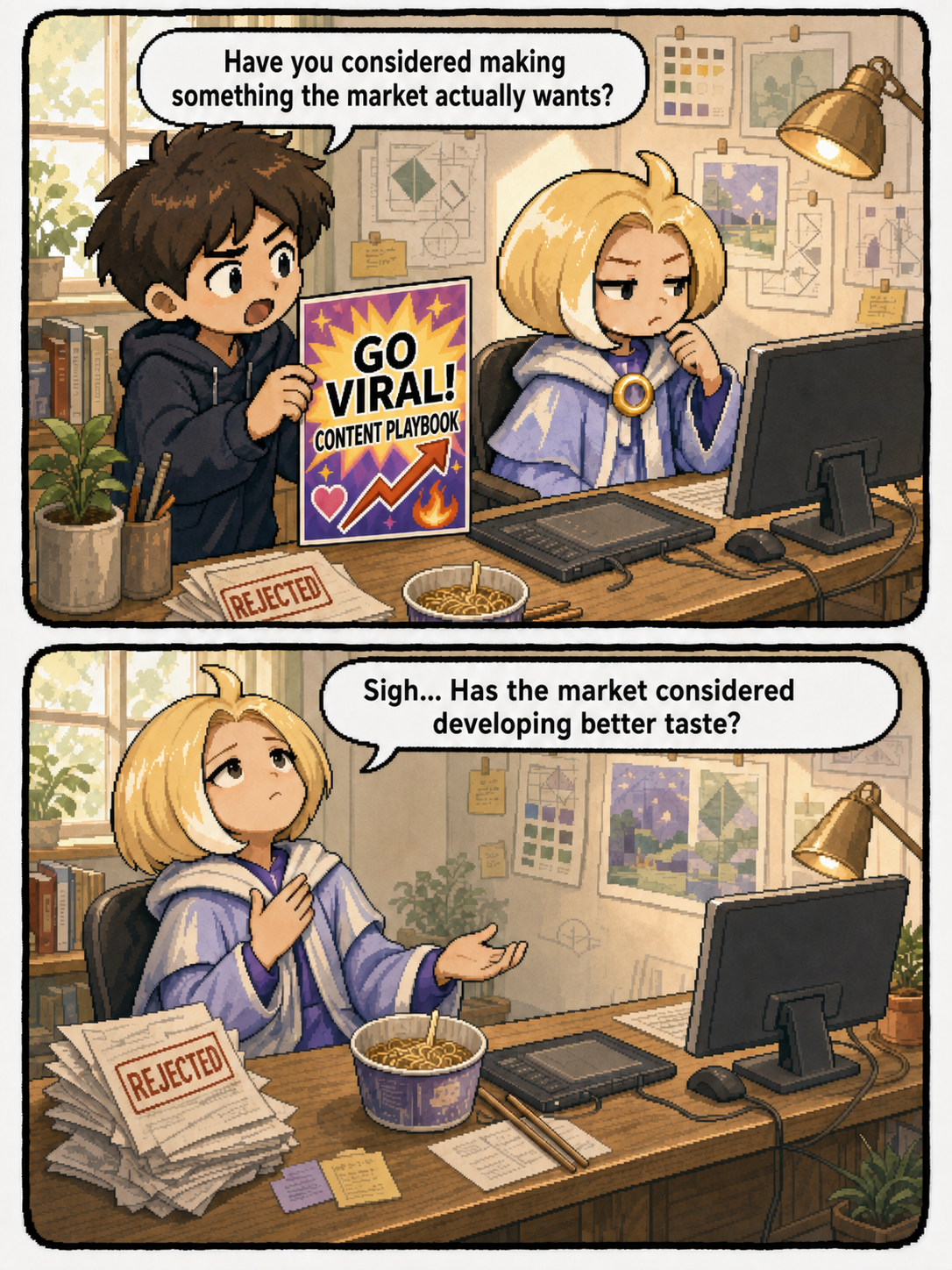
Disclaimer: Ba Zi is a personality framework for self-reflection, not a substitute for professional medical, financial, or legal advice. All patterns describe tendencies, not destinies.