
Why You Give to Some People and Withhold from Others (It's Not Personal — It's Energetic)
You know that friend who always picks up the tab for struggling friends but hesitates when a wealthy colleague asks for a favor? And that colleague who seems magnetically drawn to people with power, always offering help upward?
Neither is "right" or "wrong." They're running different energy programs.
In BaZi (Chinese energy archetypes), your relationship giving patterns aren't about your upbringing, your love language, or your moral character. They're structural — built into how your energy naturally flows.
The Three Positions in Every Relationship
Every relationship involves a power dynamic (not in a manipulative way — structurally). BaZi defines three positions, all relative to you:
| Position | What it represents |
|---|---|
| Weaker (Externals Energy) | People with less leverage, fewer resources, lower rank than you |
| Stronger (Harness Energy) | People with more authority, resources, or positional power than you |
| Self (Core Energy) | Your peers — people at a similar level to you (also represents your identity, agency, and boundaries) |
Mediums of Energy Flow
The relationship between these three positions is sometimes carried through two intermediary energies:
| Medium | Meaning |
|---|---|
| Output | What you generate — your skills, expression, creativity. Carries your giving/challenging outward. |
| Input | What amplifies you — knowledge, systems, source of your energy. Carries the stronger's giving inward. |
The Two Mechanisms: Give vs. Control
There are only two fundamental moves in the giving game:
| Notation | Action | What it means |
|---|---|---|
| + | Give / Transform | Your energy flows toward someone. You support, nurture, or invest. |
| - | Control / Challenge | Your energy presses against someone. You compete, challenge, or dominate. |
The 3 Giving Patterns
Some patterns are pure givers, some are challengers, and some alternate depending on who they're with.

1. The Empath (Output + Externals) — You give to the weaker
Your Output Energy flows naturally to people in a weaker position. You sense what others need and you create value for them. This isn't charity — it's that your creative energy needs a receiver, and the weaker party is the natural recipient.
In practice: You're the friend who mentors juniors, who spots struggling talent, who can't help but share what you know with people who need it. But you may hesitate to "sell yourself" to people more powerful than you — that feels unnatural.

2. The Contributor (Externals + Harness) — You give upward to the stronger
Resources flow from the weaker position toward authority. You instinctively understand that access to higher circles costs something. You pay the entry fee.
In practice: You invest in relationships with people ahead of you. You're willing to pay for mentorship, for access, for the right circles. The danger? Giving without a channel — sometimes that investment doesn't translate into real returns.

3. The Systematizer (Harness + Input) — The stronger gives to you
Here, the flow reverses: authority figures naturally invest in you. Not because you ask — because your energy invites it. Pressure from above transforms into support, carried through the Input Energy medium.
In practice: You attract mentors. People in power see potential in you and want to develop it. Your challenge is passivity — waiting for the system to provide instead of actively directing your growth.
The 6 Challenge Patterns

4. The Problem Solver (Output - Harness) — You challenge the stronger, with skill
Your Output Energy directly confronts authority — not with aggression, but with your skill and insight. You see the flaws in existing systems and you can't help but build something better.
In practice: You're the person who finds loopholes, who questions "the way things have always been done," who disrupts rather than complies. You don't need to cozy up to power — you outthink it.

5. The Virtuoso (Core - Harness) — You challenge the stronger, with body and will
Same target, different weapon. Not through skill — but through your own body and will. You grind rules into muscle memory, mastering them so completely that you transcend them.
In practice: You practice until you're undeniable. You don't argue with the system — you become so good within it that the system has no choice but to recognize you. Like a violinist who plays one scale 10,000 times until it's flawless.

6. The Purist (Core - Externals) — Your will dominates the weaker
Your Core Energy presses down on Externals. Here, Externals represents both weaker people and your own material interests — because Externals Energy is defined as what you can control and allocate. You prioritize your principles over accommodation.
In practice: You're fiercely independent and refuse to compromise your values for money or approval. But you might give away your time and energy to prove yourself among equals — that's your own Externals being sacrificed for peer acceptance.
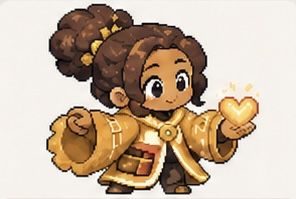
7. The Selfless (Externals - Core) — The weaker suppresses your agency, directly
Here the power dynamic is reversed — the weaker position controls you. External demands override your internal sense of self. You become a tool for others' goals.
In practice: You're highly attuned to what others need from you. You deliver, you execute, you accommodate. The upside: you're incredibly responsive to market needs. But your own wants become fuzzy. Your identity is shaped by external validation.
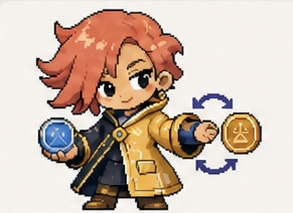
8. The Arbitrageur (Externals - Input) — The weaker suppresses your multiplier
Same dynamic as #7, but indirect. Instead of suppressing you directly, the weaker position suppresses your multiplier — the knowledge, systems, and learning that would amplify your energy.
In practice: Your preparation and learning phase gets cut short. Market demands interrupt your deep work. You sacrifice long-term development for short-term gains. Paradoxically, this pressure makes you excellent at finding leverage — because you can't afford depth.

9. The Sublime (Harness - Core) — The stronger suppresses your self
Authority bears down on your identity. You function within systems so powerful that your individuality becomes secondary.
In practice: You work within rigid structures — corporate, regulatory, institutional. The high path: you find freedom through mastery, becoming so skilled within the system that you transcend it. The low path: you lose yourself entirely.
The Mediums: How Giving Actually Happens
Patterns 1, 3, 4, 5, and 8 involve a "medium" — an intermediary energy that carries the giving or challenging:
| Medium | What it is | Role |
|---|---|---|
| Output | Your created energy — skills, expression, creativity | Carries your giving/challenging outward |
| Input | Your multiplier — knowledge, systems, source of your energy | Carries the stronger's giving inward |
- Output is what you generate and send into the world. When you give to the weak or challenge the strong, you do it through your Output — your skills, your words, your creations.
- Input is what amplifies you, your source. When the strong give to you, they give through your Input — they teach you, they systemize you, they give you tools that multiply your capability.
Why This Matters
Each pattern has its own strengths and blind spots. The point isn't to change who you naturally give to. It's to understand which direction your energy flows, so you can:
- The Empath requires developed skills — you can't give what you haven't generated.
- The Systematizer requires humility — you must be able to receive and absorb.
- The Arbitrageur's risk is losing your growth infrastructure — your learning system gets compromised.
What Are Your Giving Patterns?
Your BaZi chart reveals which of these patterns are active in your energy configuration. Most people have 2-4 active patterns.
Your giving pattern is a structural feature of your energy, not a character flaw.